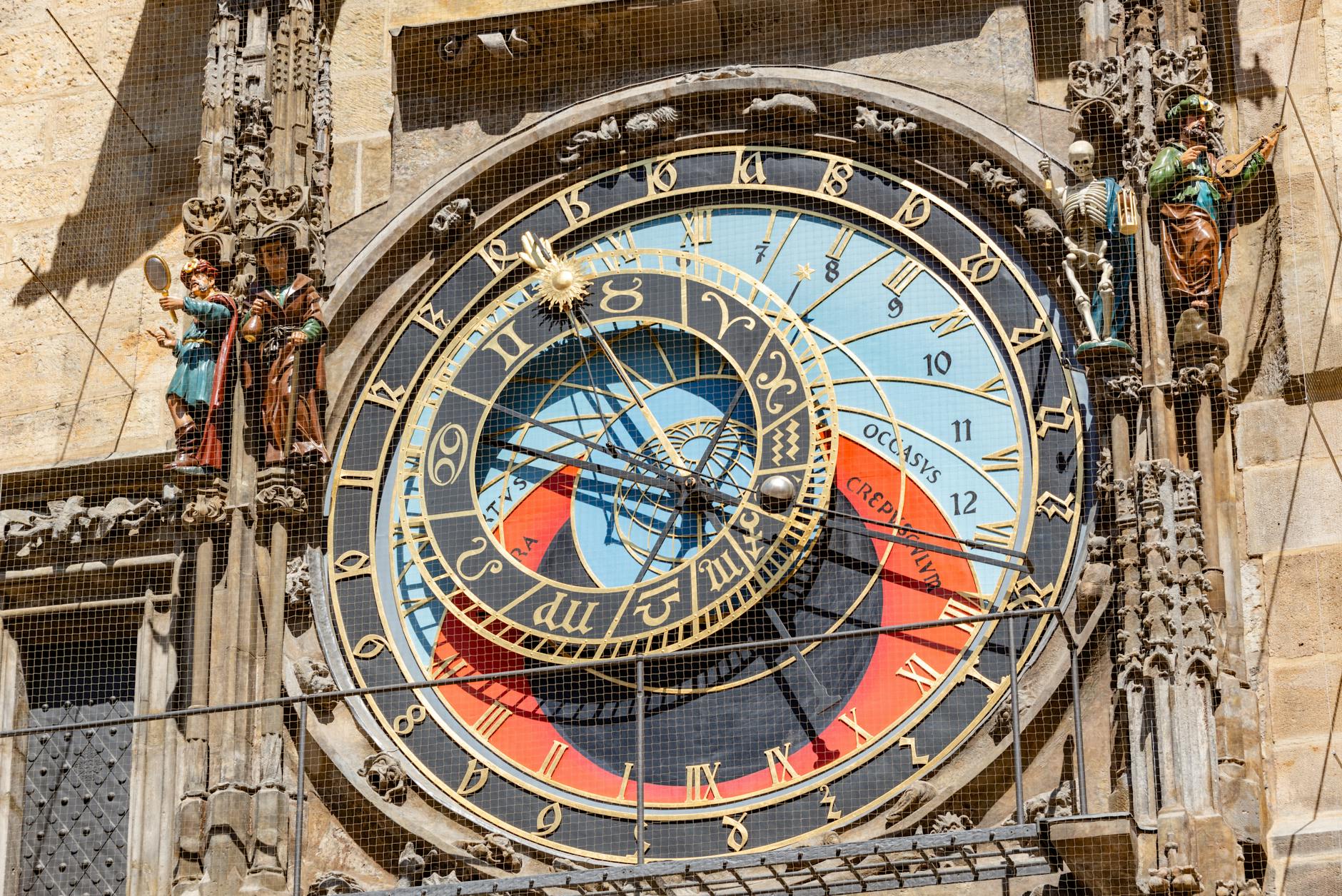
 This is not a philosophical claim. It shows up the moment you try to define something simple like “what day is it”.
Most people operate on a civil model of time. A day runs from 00:00 to 23:59. Midnight marks the reset. The clock moves forward evenly, and each day is assumed to be structurally identical to the next. This works because it is designed to work. UTC and time zones exist to coordinate activity across regions. They impose a consistent grid on top of something that is not actually consistent.
That grid hides the underlying behavior of solar time.
In reality, sunrise and sunset shift throughout the year. The length of daylight changes. The balance between day and night is not fixed, and the variation becomes more pronounced the further one moves away from the equator. The clock continues to show 24 uniform hours, but what those hours represent in terms of light and darkness is constantly changing. The system stays stable by ignoring that variation.
The assumption that a day begins at midnight is part of that same system. Midnight is not a physical boundary. It is a coordination point.
The definition of a “day” depends entirely on the boundary you choose.
In Islamic timekeeping, the day begins at Maghrib. The boundary is not an arbitrary timestamp but a visible transition, the shift from day to night. A full day is therefore defined as the interval from one Maghrib to the next. This changes the structure of time in a very direct way. The early hours of the morning do not belong to a new day. They belong to the continuation of the previous one, because the boundary has not yet been crossed.
This difference is easy to describe, but harder to model correctly.
Take a simple case. At 05:30 in the morning, the civil model treats that as part of a new day because midnight has passed. Under the Islamic model, it is still part of the previous day, because the next Maghrib has not yet occurred. The definition of “today” depends entirely on which boundary you choose to respect.
When I built the app, this was the core constraint. Everything starts from the current time, and that current time determines a single active window from one Maghrib to the next. That window may begin on the previous civil date or the current one, depending on whether the Maghrib boundary has been crossed. Once that window is established, everything else follows from it. The timeline, the segments between prayers, the positioning of markers, all of it is derived from that one decision point.
This has a practical implication that does not exist in the civil model. You cannot represent an Islamic day using a single row of data tied to a single calendar date. You need at least two. The beginning of the day is anchored in one civil date, while most of the events that define it occur in the next. The data model itself has to acknowledge that a “day” is not aligned with the calendar.
Once you see it implemented, the difference stops being abstract. Midnight starts to feel arbitrary. It is a clean boundary only because the system forces it to be. The Maghrib boundary, on the other hand, moves slightly over the year. It reflects changes in the solar cycle. The structure is less convenient, but it is more faithful to what is actually happening in the environment.
This is where the two systems diverge in purpose.
Civil time prioritizes consistency. It smooths out variation so that coordination becomes trivial. Everything lines up. Every day looks the same on the clock.
The Islamic model prioritizes alignment. It ties the structure of the day to a physical transition that can be observed, even if that means the boundary shifts and the distribution of time within the day is not uniform.
Both systems are abstractions. Neither one is more “correct” in an absolute sense. They are optimized for different constraints.
The difference only becomes obvious when you try to answer a simple question with precision. Not “what time is it”, but “what day is it right now”.
The implementation is here:
It visualizes the active Maghrib-to-Maghrib window and makes the difference between the two models immediately visible.