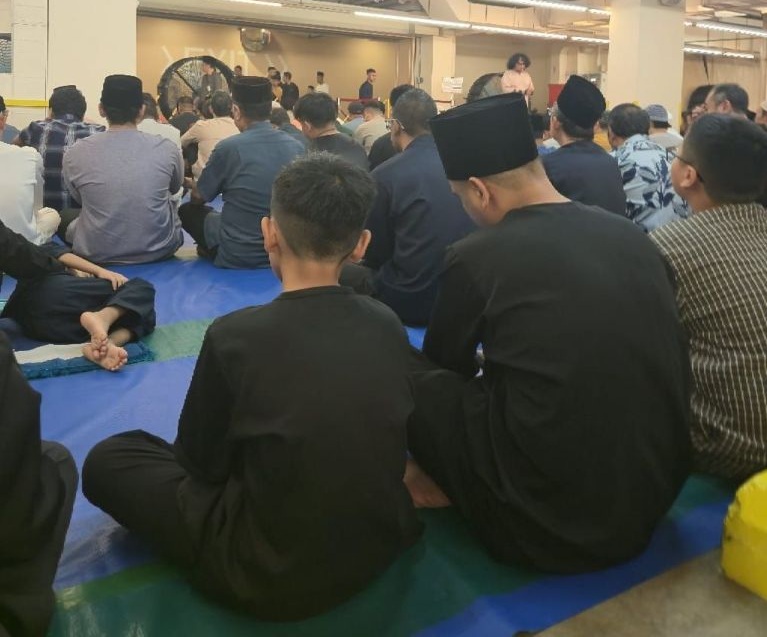
One of the sunnah prayers in Ramadan is tarawih.
It is prayed in sets of two rakaat. Some complete eight, others twenty.
There is no rigid rule.
It can be done in the mosque or at home after Isyak.
The first time I prayed tarawih was at a small mosque tucked between private condos and landed houses.
A quiet setting.
You would expect calm.
Usually tarawih begins after Isyak according to the official prayer timetable.
That mosque shifted Isyak to 9:00 pm. That is not an issue.
Prayer times have valid ranges, and adjustments are permissible.
What struck me was not the timing.
It was the speed.
Before I could complete Al-Fatihah, the imam was already in rukuk.
When I tried to catch up, they were in sujud.
It felt less like prayer and more like a race to completion.
I have always understood prayer to cultivate khushu, stillness, and presence.
There is a difference between efficiency and haste.
This felt like haste.
I attended a few times, thinking perhaps I needed to adjust.
But the pattern was consistent.
The pace left little room for reflection.
Today, I perform tarawih at home, at my own time after Isyak.
Sometimes I sleep first and wake up at 3:00 am, performing tarawih and tahajjud in the quiet of the night.
Prayers at 3:00 am carry a different stillness.
No rush. No crowd. Just you, your recitation, and the silence.
Congregational prayer has its virtues.
But if the form empties out the meaning, something is off.
Ramadan is not about how fast we can finish twenty rakaat.
And it is not about how many hours we can claim to have fasted.
It is about what remains with us after we stand, bow, prostrate, and restrain ourselves throughout the day.